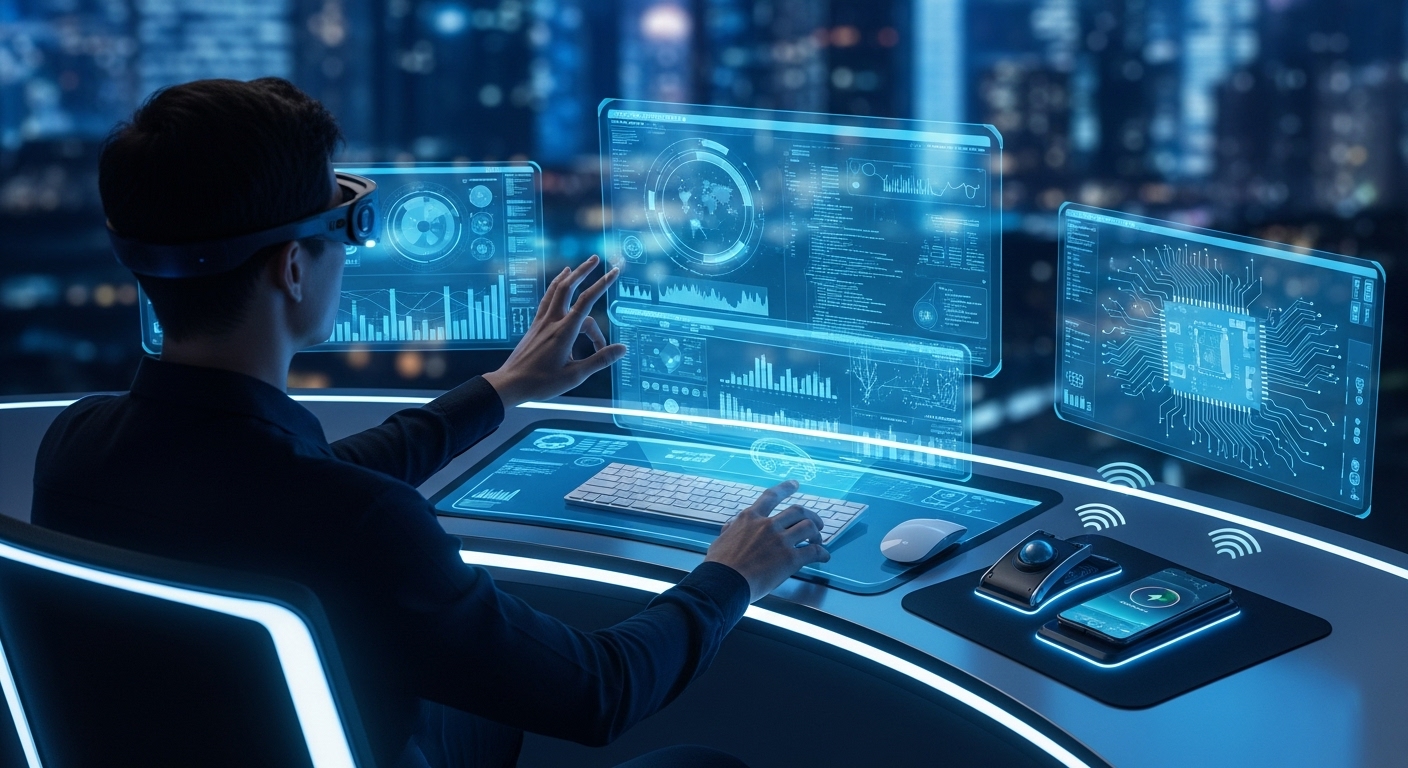






Technology has become an inseparable part of human life. What once was considered futuristic is now the core of everyday existence. From smartphones to artificial intelligence, from digital currencies to smart cities, the pace of innovation has reached unprecedented levels. Technology is no longer just a tool for convenience—it is redefining how we communicate, work, travel, and even think. In this blog post, we will explore the key technological trends transforming the world today, their implications for society, and the possibilities they open for the future.
Understanding the Power of Artificial Intelligence
Artificial intelligence, often abbreviated as AI, has moved from science fiction into the real world in a way that is both exciting and transformative. AI is the simulation of human intelligence in machines, enabling them to learn, reason, and make decisions. Today, AI systems are not only performing tasks faster but also with higher accuracy than humans in many domains.
In healthcare, AI is changing the way diseases are diagnosed and treated. Algorithms can analyze medical images such as X-rays and MRIs to detect abnormalities that may be missed by human eyes. Predictive AI systems can forecast the progression of illnesses, allowing doctors to take preemptive measures. In finance, AI monitors massive volumes of transaction data to detect anomalies, prevent fraud, and assist in investment decisions.
However, the rise of AI also raises questions. Job displacement is a real concern as machines take over repetitive and analytical tasks. Ethical issues arise in the use of AI for surveillance or decision-making, where bias in data could lead to unfair outcomes. Despite these challenges, the integration of AI into various industries promises increased efficiency, safety, and innovation.
The Emergence of Quantum Computing
Quantum computing represents a radical leap in computing power. Unlike traditional computers that use bits to store data as either 0 or 1, quantum computers use qubits, which can exist in multiple states simultaneously. This property allows quantum computers to perform calculations at speeds unimaginable for classical computers.
Quantum computing holds the potential to revolutionize industries such as cryptography, drug development, and climate modeling. Problems that would take conventional computers thousands of years to solve could be addressed in minutes using quantum algorithms. For example, quantum simulations can accelerate the discovery of new materials or medications by modeling complex molecular interactions in ways previously impossible.
Despite the potential, quantum computing is still in its early stages. Challenges such as maintaining qubit stability, error correction, and scaling the technology remain significant hurdles. Nevertheless, major technology companies and research institutions are investing heavily, signaling that quantum computing may soon become a reality that reshapes the world.
The Internet of Things and the Connected World
The Internet of Things, or IoT, refers to a network of interconnected devices that communicate with each other through the internet. These devices range from smart home appliances to industrial machinery, all designed to collect, share, and analyze data to improve efficiency and convenience.
In households, IoT technology enables smart refrigerators, thermostats, and lighting systems that adjust automatically based on usage patterns or user preferences. Wearable devices track health metrics, such as heart rate and sleep patterns, giving individuals insights into their well-being. In cities, IoT sensors optimize traffic flow, monitor environmental conditions, and enhance public safety.
The potential of IoT extends to industries such as agriculture, where smart sensors track soil moisture and weather conditions, helping farmers make informed decisions to improve yield and sustainability. However, the proliferation of connected devices also raises concerns about data privacy and security. Each new connection is a potential vulnerability that can be exploited if not adequately protected.
Blockchain: Beyond Cryptocurrencies
Blockchain technology is often associated with cryptocurrencies, but its applications go far beyond digital money. A blockchain is a decentralized digital ledger that records transactions securely and transparently. Its key features—immutability, decentralization, and transparency—make it a powerful tool for industries seeking trust and efficiency.
Supply chains, for example, benefit from blockchain by providing a clear record of every step a product takes from origin to consumer. This traceability helps prevent fraud, counterfeiting, and unethical practices. Blockchain is also revolutionizing banking, allowing secure and fast transactions without the need for intermediaries. Smart contracts, which automatically execute agreements when certain conditions are met, streamline business operations while reducing human error.
Despite its advantages, blockchain faces challenges such as energy consumption, scalability, and regulatory hurdles. Overcoming these challenges could unlock enormous potential across industries, making business processes more secure and efficient.
The 5G Revolution and Future Connectivity
The arrival of 5G networks marks a significant advancement in connectivity. With higher speeds, lower latency, and increased capacity, 5G is more than just a faster internet connection; it enables entirely new applications and technologies to flourish.
5G supports the growth of IoT by connecting billions of devices in real-time. In autonomous vehicles, 5G enables vehicles to communicate with each other and with traffic infrastructure, reducing accidents and optimizing traffic flow. Telemedicine benefits from 5G through real-time remote consultations and even remote surgeries, expanding access to healthcare services.
The entertainment industry also experiences a transformation with 5G. High-speed, low-latency networks enhance streaming experiences and make augmented and virtual reality applications more immersive. However, rolling out 5G infrastructure worldwide is a complex task, requiring significant investment and careful planning.
Cybersecurity in a Digital Era
As technology becomes more pervasive, the importance of cybersecurity cannot be overstated. Every new innovation—from AI and IoT to cloud computing—introduces potential vulnerabilities that can be exploited by cybercriminals.
Organizations and individuals must adopt a proactive approach to cybersecurity. This includes robust encryption, multi-factor authentication, continuous monitoring, and regular software updates. AI is increasingly being used not only to create threats but also to counter them, detecting suspicious patterns and responding faster than human operators can.
Privacy concerns also grow alongside technological adoption. Individuals need to be aware of how their data is collected and used, and governments must implement regulations to ensure responsible data handling practices.
Ethical Considerations and the Human Factor
The rapid evolution of technology brings with it ethical challenges that cannot be ignored. Automation may lead to job losses in certain sectors, while the benefits of advanced technologies are often unevenly distributed. AI systems can perpetuate biases if not designed with fairness in mind, and technologies like facial recognition raise questions about surveillance and civil liberties.
Responsible innovation requires balancing technological progress with societal impact. Governments, businesses, and individuals must work together to ensure that technology serves humanity rather than undermining human values. Education, ethical frameworks, and public awareness are crucial components in building a future where technology enhances lives without compromising principles.
The Future of Innovation
The future of technology is filled with both promise and uncertainty. Emerging fields such as AI-driven medicine, quantum-powered logistics, and IoT-enabled smart cities will reshape industries, economies, and daily life. Technology will empower individuals with tools and insights previously unimaginable, making life more efficient, connected, and convenient.
At the same time, humanity faces challenges that accompany this technological revolution. Ethical dilemmas, environmental concerns, and socioeconomic disparities must be addressed to ensure that innovation benefits everyone. The true measure of progress lies not only in what technology can do but also in how it is used to improve the quality of life for all people.
Conclusion: Embracing a Technology-Driven World
Technology is no longer an accessory to modern life—it is its foundation. Artificial intelligence, quantum computing, IoT, blockchain, and 5G are more than buzzwords; they are forces shaping our world in real-time. These innovations offer tremendous opportunities but also come with responsibilities.
The path forward requires thoughtful engagement, ethical decision-making, and a commitment to leveraging technology for the greater good. By understanding the trends, challenges, and possibilities, individuals and organizations can navigate this rapidly evolving landscape with confidence. The future is not just about the technology itself—it is about how we choose to harness it to create a smarter, safer, and more equitable world.
Technology is, ultimately, a reflection of human ingenuity. The more we embrace it responsibly, the more capable we become of solving complex problems, improving lives, and opening doors to possibilities that were once confined to imagination.