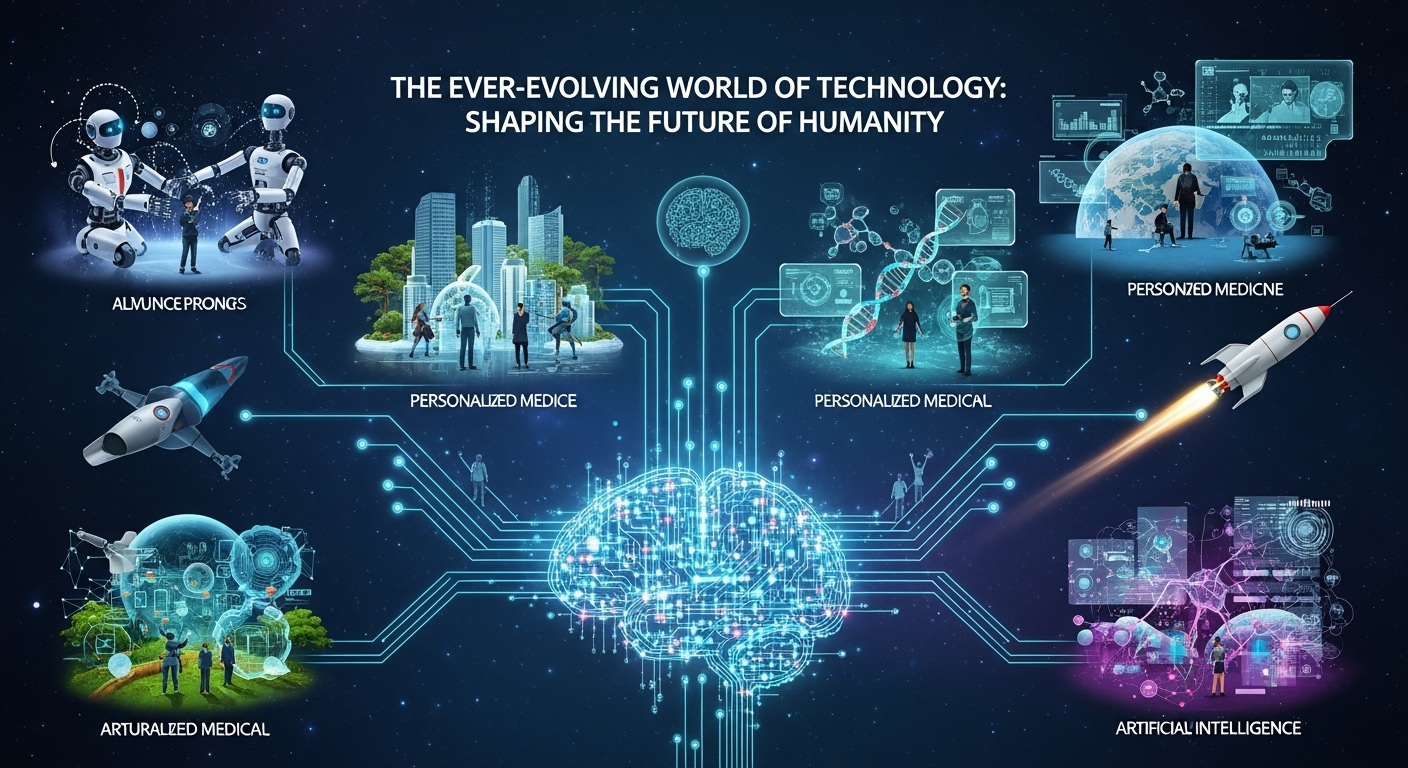






Technology has always played a pivotal role in shaping human progress, but never before has its impact been so immediate and far-reaching. From artificial intelligence (AI) to blockchain and virtual reality (VR), new innovations are transforming not only industries but also the way we live, work, and interact with each other. As we look ahead, it’s clear that the future of technology will continue to challenge our perceptions and open up endless possibilities. In this blog, we’ll explore some of the most exciting technological advancements and what they mean for the future.
Artificial Intelligence: From Smart Assistants to Problem Solvers
Artificial intelligence (AI) is already embedded in many aspects of our daily lives, but it’s just scratching the surface of what’s possible. AI is being used in everything from simple tasks like organizing emails and recommending movies to more complex applications such as driving autonomous cars, diagnosing medical conditions, and even creating art. Machine learning, a subset of AI, allows systems to learn from data and improve over time, making them increasingly effective at solving complex problems.
In healthcare, AI is transforming the way diseases are detected and treated. For instance, AI algorithms are now capable of analyzing medical images with accuracy that rivals, and sometimes exceeds, human doctors. In business, AI is helping companies make data-driven decisions, predict customer behavior, and optimize operations. As AI continues to evolve, its potential to innovate will only grow, potentially revolutionizing fields as diverse as law, entertainment, and education.
Blockchain: Beyond Cryptocurrency and Into Everyday Life
Blockchain technology is most commonly associated with cryptocurrencies like Bitcoin and Ethereum, but its applications extend far beyond the realm of digital money. At its core, blockchain is a decentralized ledger system that ensures transparency, security, and immutability of data across multiple participants. This makes it an ideal solution for industries that require secure, verifiable transactions.
In supply chain management, for example, blockchain can track the journey of products from origin to consumer, offering unprecedented transparency and reducing the risk of fraud. In finance, blockchain is being used for more secure and efficient ways of handling payments, remittances, and even contracts through smart contracts. Its potential to disrupt industries such as healthcare, real estate, and even voting systems is enormous, as it promises to eliminate middlemen and increase accountability.
Quantum Computing: Unlocking the Power of the Subatomic World
While most of us are familiar with traditional computing, which relies on binary data (ones and zeros), quantum computing operates on a completely different principle. Quantum computers use quantum bits, or qubits, which can exist in multiple states simultaneously, allowing them to process an immense amount of data at once. This makes quantum computing exponentially more powerful than classical computing, especially for certain tasks like cryptography, material science, and complex simulations.
Although quantum computing is still in its early stages, it holds the potential to solve problems that are currently beyond the capabilities of even the most powerful supercomputers. For example, it could revolutionize drug discovery by simulating molecular interactions at an atomic level, something classical computers struggle to do. In cybersecurity, quantum computers could be used to create virtually unbreakable encryption methods. As quantum computing continues to evolve, it promises to open new frontiers in science and technology.
The Rise of 5G: A Faster, More Connected World
The rollout of 5G networks is a major leap forward in mobile technology. 5G offers vastly improved download speeds, lower latency, and the ability to support more devices simultaneously. This will have a profound impact on everything from mobile gaming and entertainment to business operations and the Internet of Things (IoT).
With 5G, we can expect faster and more reliable communication in real-time, which is essential for applications like telemedicine, remote surgeries, and autonomous vehicles. The ability to connect billions of devices seamlessly will also enable smart cities, where everything from traffic lights to waste management systems are interconnected and optimized for efficiency. As 5G networks expand, they will lay the foundation for a more connected and responsive world.
Augmented Reality (AR) and Virtual Reality (VR): Blurring the Line Between the Real and Digital
Augmented Reality (AR) and Virtual Reality (VR) are two technologies that are quickly gaining traction, particularly in the entertainment and gaming industries. While VR immerses users in entirely virtual environments, AR enhances the real world by overlaying digital elements onto it. Together, these technologies are poised to change the way we interact with digital content and each other.
In gaming, VR has already transformed the player experience by providing an immersive, 360-degree environment where players can interact with their surroundings in ways that traditional gaming couldn’t. In retail, AR is being used to let customers try on clothes or visualize furniture in their homes before making a purchase. The potential applications of AR and VR are vast, extending into education, healthcare, tourism, and even workplace training. In the future, AR and VR may become integral parts of daily life, offering entirely new ways to experience the world.
The Impact of Technology on Society: Ethical Considerations and Challenges
While technological advancements bring incredible benefits, they also come with challenges and ethical considerations. The rise of AI, for example, raises questions about privacy, bias, and job displacement. As AI systems become more capable of making decisions, it’s important to ensure that these decisions are transparent, fair, and free from bias. Similarly, the increasing use of automation in industries like manufacturing and transportation may lead to significant job losses, which will require thoughtful solutions in terms of retraining workers and creating new opportunities.
Blockchain, while offering increased security and transparency, also presents challenges in terms of scalability and energy consumption, particularly with cryptocurrencies like Bitcoin. The environmental impact of cryptocurrency mining has raised concerns about its sustainability. Moreover, as technology continues to evolve rapidly, governments and organizations must develop effective regulations that address issues like data privacy, cybersecurity, and the ethical implications of emerging technologies.
Conclusion: Embracing a Tech-Driven Future
The future of technology is both exciting and complex. Innovations like AI, blockchain, quantum computing, 5G, and AR/VR are reshaping industries, driving new forms of communication, and creating entirely new ways of interacting with the world. While these advancements hold immense potential, they also require careful consideration of their societal impact, ensuring that technology serves the greater good.
As we embrace this tech-driven future, it’s essential that we continue to push the boundaries of innovation while also addressing the challenges they bring. The rapid pace of change means that we must stay adaptable, curious, and aware of both the opportunities and risks that technology presents. One thing is clear: the future is now, and the possibilities are limitless.