





Introduction
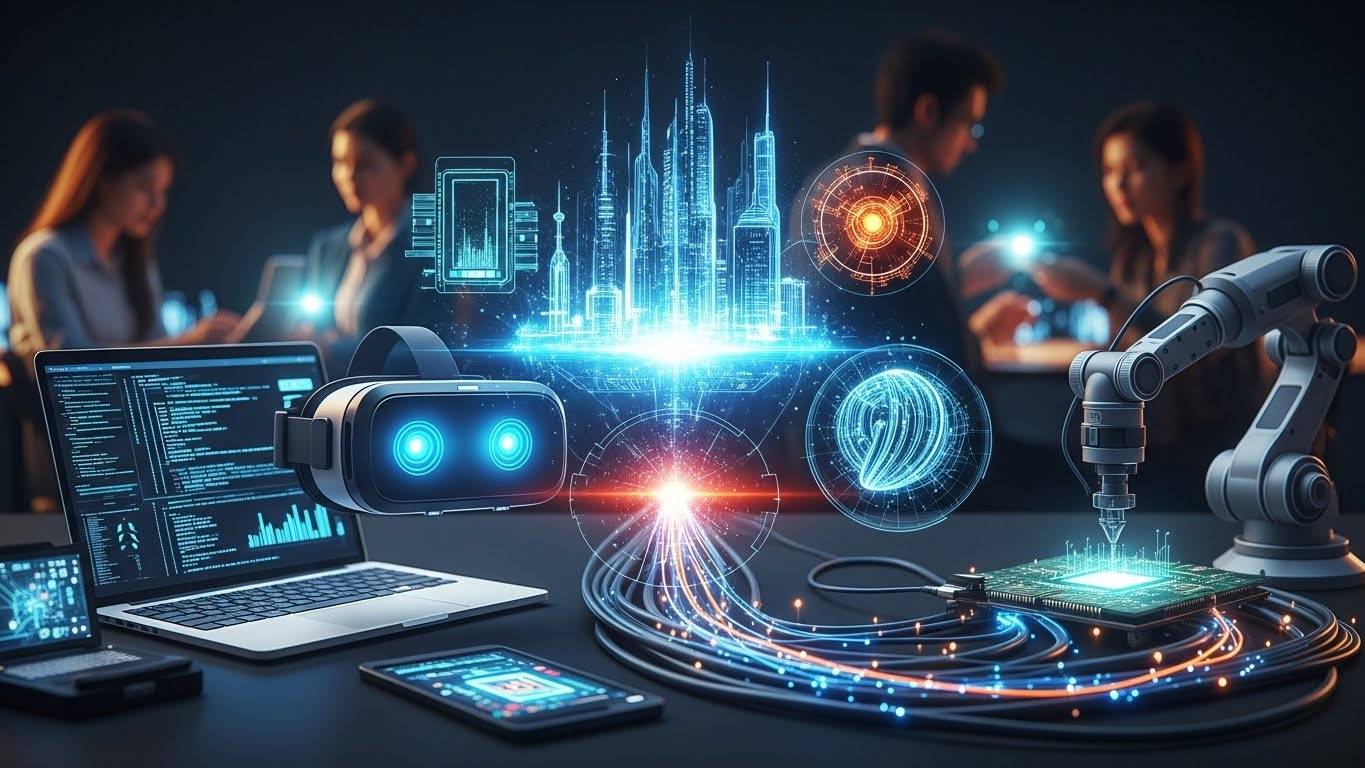
Technology has always been at the center of human progress. From the invention of the wheel to the development of the internet, every era has witnessed innovation that changed the course of civilization. Yet, what makes the current wave of technological evolution truly remarkable is its invisibility. Unlike the early days when technology was visible, tangible, and mechanical, today’s advancements operate silently in the background. Artificial intelligence, cloud computing, quantum algorithms, and Internet of Things devices are quietly reshaping every aspect of our daily lives without us even realizing it. This silent revolution is not only changing how we live and work but also redefining the very meaning of human interaction and intelligence.
The Shift from Visible to Invisible Technology
In the past, technology was something we could see and touch—massive computers, bulky phones, and visible machinery. But now, the true power of technology lies in software, data, and connectivity. The world is moving from visible devices to invisible systems that function behind screens and clouds. This shift is not just aesthetic; it represents a deeper transformation in how we experience technology. For example, artificial intelligence algorithms running in the background personalize our search results, manage our smart homes, and optimize our energy usage—all without our direct involvement.
Invisible technology means systems that are embedded so deeply in our lives that we no longer notice them. Smart assistants respond to voice commands, cars update themselves overnight, and financial systems predict economic trends before humans can. The focus has shifted from using technology to living with it seamlessly integrated into every moment of our lives.
The Role of Artificial Intelligence in Everyday Life
Artificial intelligence, once a distant dream, is now a daily companion. Whether it is facial recognition unlocking smartphones, chatbots assisting in customer service, or predictive text completing our sentences, AI has become a quiet partner in our daily routines. What makes AI so revolutionary is not its visibility but its subtlety. It learns from patterns, adapts to our behavior, and makes decisions that appear almost human.
AI has also transformed industries. In healthcare, algorithms assist doctors in diagnosing diseases earlier and more accurately. In transportation, self-driving systems analyze surroundings faster than any human could. In finance, AI detects fraudulent activities within seconds, saving billions of dollars each year. These invisible systems are redefining trust, speed, and efficiency in ways that were unimaginable just a decade ago.
Cloud Computing: The Unseen Backbone of the Digital Age
Behind every modern digital experience lies cloud computing. We stream movies, store photos, run businesses, and even play games through the cloud, often without thinking about it. The cloud is not a visible entity but a network of interconnected servers located around the globe. It enables access to data and services from anywhere, anytime, transforming how individuals and organizations function.
Cloud computing has given rise to an era of flexibility and scalability. Businesses no longer need massive physical infrastructure; they can rent computing power on demand. This has allowed startups to compete with global corporations, leveling the technological playing field. Furthermore, cloud technology supports remote work, enabling people to collaborate across continents. The pandemic demonstrated how crucial this invisible infrastructure has become for maintaining productivity and connection in a digital world.
Quantum Computing: The Next Frontier of Invisible Power
If traditional computers are powerful, quantum computers are revolutionary. Unlike classical systems that process information in binary form, quantum computers use qubits, which can represent multiple states at once. This allows them to perform complex calculations at speeds unimaginable to conventional technology. While still in its early stages, quantum computing promises breakthroughs in drug discovery, cryptography, and artificial intelligence.
What makes quantum computing fascinating is its invisibility. It operates on principles of quantum mechanics—concepts that are beyond direct human perception. As research progresses, this invisible technology could solve problems currently considered impossible, from simulating molecular structures to optimizing global logistics.
The Internet of Things and the Rise of Smart Environments
The Internet of Things, or IoT, connects everyday devices to the internet, allowing them to communicate and function intelligently. From smart thermostats that learn our temperature preferences to wearable health trackers that monitor our heart rates, IoT has made technology more personal and intuitive.
In smart cities, invisible sensors manage traffic flow, reduce energy consumption, and enhance public safety. In agriculture, connected devices analyze soil conditions and weather patterns to maximize crop yields. In homes, IoT enables complete automation—lights, security, and appliances all responding to voice commands or routines.
The beauty of IoT lies in its subtlety. It does not demand attention; it works quietly in the background, improving efficiency and comfort. However, this also raises questions about privacy and security, as more devices collect and share personal data. Balancing convenience with protection will be a key challenge in the coming years.
The Merging of Human and Machine Intelligence
One of the most profound changes brought by invisible technology is the merging of human and machine intelligence. Brain-computer interfaces, advanced prosthetics, and neural networks are blurring the line between biological and digital intelligence. Machines are no longer mere tools; they are becoming extensions of human cognition.
This integration offers incredible possibilities. People with disabilities can regain mobility through mind-controlled prosthetics. Researchers can accelerate learning by directly linking neural activity with artificial systems. Artists and designers can collaborate with AI to create works that blend human emotion with computational precision.
However, this evolution also raises ethical and philosophical questions. As machines become more capable of independent thought, how do we define creativity, consciousness, or even humanity? The invisible nature of these technologies makes the answers more complex, as their influence operates at both mental and societal levels.
Cybersecurity in the Age of the Unseen
With technology becoming more invisible, cybersecurity has become more critical than ever. Every digital interaction, from banking transactions to social media posts, leaves a trail of data. Hackers and cybercriminals exploit unseen vulnerabilities within systems that most people never even notice.
Modern cybersecurity focuses not just on defense but on prediction. AI-driven systems detect anomalies before they become threats, using machine learning to stay one step ahead of attackers. Encryption, biometric authentication, and blockchain-based verification are being integrated into systems to ensure safety in a world where digital footprints are unavoidable.
The invisible war between hackers and defenders continues every second, shaping the safety of the connected world we depend on. For individuals and businesses alike, awareness and proactive measures are essential to navigate this unseen battleground.
The Ethical Dilemma of Invisible Innovation
As technology becomes more pervasive yet less visible, ethical concerns grow stronger. Who controls the algorithms that shape our decisions? How much data should companies collect? Where is the line between personalization and manipulation?
Invisible technology operates in the background, often without explicit consent or understanding from users. For instance, recommendation systems influence what we read, watch, and even believe. Social media algorithms can amplify certain opinions, shaping public discourse in subtle ways. Transparency and accountability must evolve alongside innovation to ensure that invisible systems serve humanity rather than control it.
The Future of Human Interaction with Invisible Tech
The future promises even deeper integration between humans and technology. Augmented reality and virtual reality will merge the digital and physical worlds, creating immersive environments that feel as real as life itself. Voice-based interfaces will evolve into emotional companions that understand tone, mood, and context.
As this invisible layer of intelligence continues to expand, the challenge for humanity will be maintaining authenticity and balance. Technology should enhance human potential, not replace it. Education will play a crucial role in ensuring that people understand the systems shaping their lives. Awareness, adaptability, and empathy will be as important as technical skill in the coming era.
Conclusion
The invisible revolution of technology is not something we can see, yet it defines everything we do. From artificial intelligence and cloud computing to quantum mechanics and smart environments, invisible systems form the backbone of modern civilization. They make life easier, faster, and more connected—but also more complex and ethically demanding.
As we move further into this age of unseen power, our greatest responsibility is to remain aware. Technology should remain a tool for empowerment, not domination. The silent revolution is here, shaping our thoughts, our cities, and our world. Understanding its depth and direction will determine not just the future of technology but the future of humanity itself.