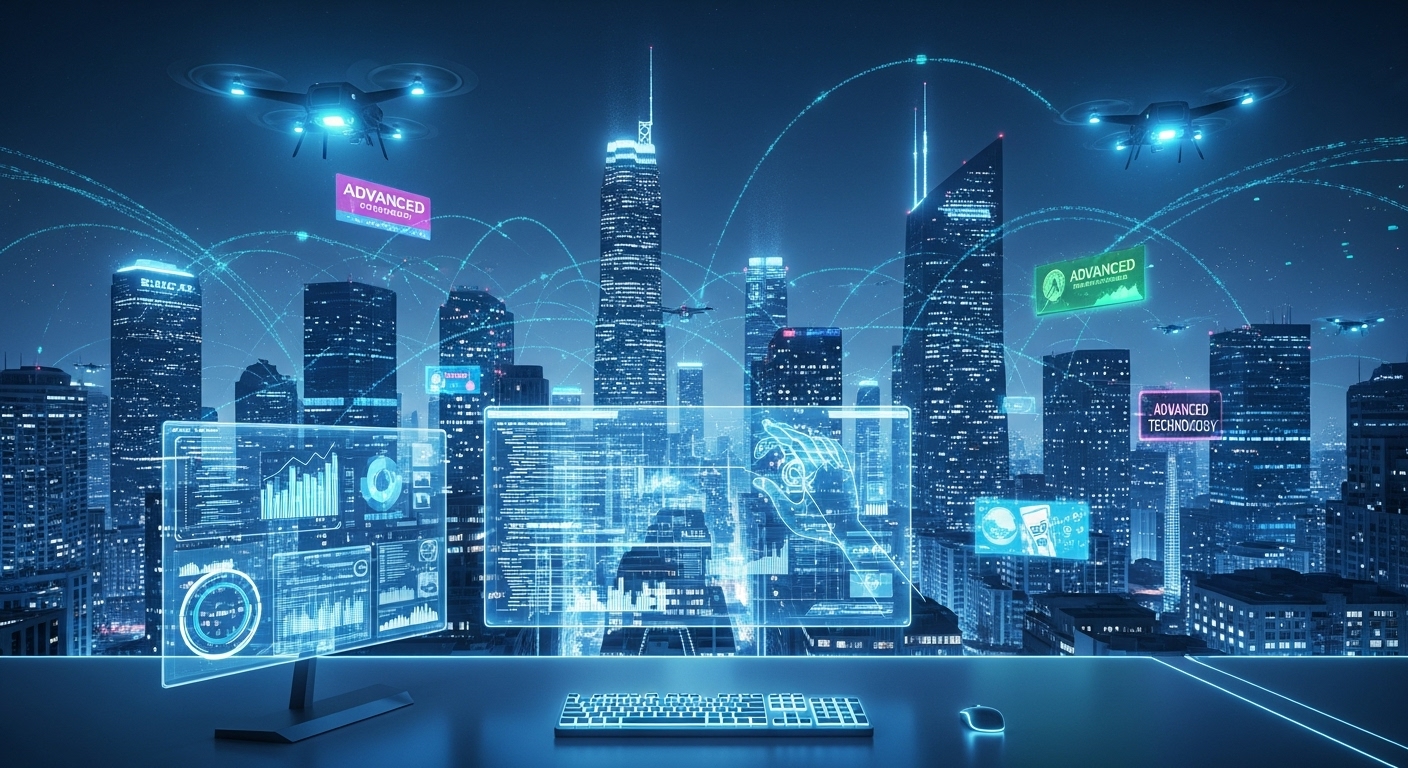







Technology has always been a force that drives progress. From the earliest tools created by human hands to the most sophisticated AI systems today, technological advancements have radically transformed the world. In the 21st century, this transformation is more rapid and impactful than ever before. As we move further into the digital age, we are seeing profound changes in how we live, work, and interact with one another. In this blog post, we will explore the emerging trends, challenges, and opportunities that are shaping the future of technology.
1. The Rise of Artificial Intelligence
Artificial Intelligence (AI) is no longer just a buzzword. It’s a technology that is starting to redefine entire industries. AI systems are becoming more sophisticated and integrated into our daily lives. From self-driving cars to personalized shopping recommendations, AI is everywhere. But the implications of AI go far beyond convenience; they stretch into areas such as healthcare, finance, education, and even creativity.
AI’s ability to analyze vast amounts of data quickly and accurately has revolutionized industries. For example, in healthcare, AI is being used to detect diseases like cancer at earlier stages, often more accurately than human doctors. In finance, AI models help detect fraudulent transactions and predict market trends. Meanwhile, in the creative industries, AI tools can help artists generate new music, create artwork, and even write content.
However, this rise of AI also comes with its challenges. Ethical concerns are at the forefront, especially when it comes to job displacement and privacy. As AI becomes capable of performing more complex tasks, there are growing concerns about its impact on employment, as automation replaces jobs traditionally done by humans. Additionally, issues such as data privacy and algorithmic bias raise important questions about how we should regulate AI technologies.
2. The Internet of Things (IoT) and Smart Cities
The Internet of Things (IoT) is a concept that envisions a world where everyday objects are connected to the internet and can communicate with one another. This includes everything from smart home devices like thermostats and refrigerators to industrial equipment and entire cities. By connecting these devices, IoT enables real-time monitoring, optimization, and automation.
In homes, IoT devices make life more convenient. Smart thermostats learn your preferences and adjust the temperature automatically. Smart refrigerators track your grocery inventory and suggest recipes. Wearable devices monitor your health and send data to your phone or even your doctor. These innovations make daily life more comfortable, efficient, and even safer.
On a larger scale, IoT is playing a crucial role in the development of smart cities. These cities use IoT technology to improve infrastructure, manage resources efficiently, and enhance the quality of life for residents. For instance, IoT-enabled sensors can monitor traffic flow, reducing congestion and improving public transportation. Similarly, smart grids optimize energy usage, leading to cost savings and reduced carbon footprints.
However, IoT also presents new challenges, particularly in terms of security. With billions of connected devices, the potential for cyberattacks grows exponentially. Ensuring that these devices are secure from hackers is a critical issue that must be addressed as IoT continues to expand.
3. Blockchain and Cryptocurrency: Redefining Trust
Blockchain technology, the foundation of cryptocurrencies like Bitcoin, is being heralded as a game-changer. While blockchain is most well-known for enabling digital currencies, its potential extends far beyond that. Blockchain offers a decentralized, transparent, and secure way of recording transactions and storing data. This has implications for various industries, from finance to healthcare to supply chain management.
In finance, blockchain’s ability to provide a secure, transparent ledger is revolutionizing how transactions are conducted. Traditional banking systems often involve multiple intermediaries, each adding time and cost to the process. Blockchain eliminates the need for these intermediaries, making financial transactions faster and more affordable. Cryptocurrencies, like Bitcoin and Ethereum, also provide an alternative to traditional banking, allowing for peer-to-peer transactions without the need for a central authority.
Beyond finance, blockchain can improve transparency in supply chains, making it easier to track the origin of goods and verify their authenticity. In healthcare, blockchain can be used to store patient records securely, allowing for easier sharing between healthcare providers while maintaining privacy.
Despite its potential, blockchain technology is not without its issues. Scalability remains a significant challenge, as the number of transactions that can be processed on most blockchain networks is currently limited. Additionally, there are concerns about the environmental impact of cryptocurrencies, as mining them consumes a large amount of energy.
4. The Expansion of 5G Networks
The rollout of 5G networks is one of the most significant advancements in telecommunications in recent years. 5G promises faster internet speeds, lower latency, and greater capacity compared to its predecessors, like 4G. This will enable a wide range of new technologies and innovations.
One of the most anticipated impacts of 5G is its ability to enable faster and more reliable connectivity for IoT devices. With 5G, the internet of things can expand exponentially, connecting millions of devices seamlessly. This will improve everything from smart homes to autonomous vehicles, where real-time data transmission is critical.
5G will also enhance the experience of technologies like virtual reality (VR) and augmented reality (AR). These technologies require a fast and stable internet connection to function effectively, and 5G will provide the speed and low latency necessary for these immersive experiences. This opens up new possibilities for industries like gaming, education, and even remote work.
However, the deployment of 5G networks is not without its challenges. Infrastructure costs are high, and there are concerns about the potential health effects of increased electromagnetic radiation. Additionally, there are geopolitical tensions surrounding the rollout of 5G, particularly with regard to security concerns related to Chinese companies like Huawei.
5. Quantum Computing: A New Frontier in Processing Power
Quantum computing is an area of research that holds the potential to revolutionize how we solve complex problems. Unlike traditional computers, which use bits to process data, quantum computers use quantum bits or qubits. These qubits can exist in multiple states simultaneously, allowing quantum computers to perform certain types of calculations exponentially faster than classical computers.
Quantum computing has the potential to transform fields such as cryptography, drug discovery, and artificial intelligence. For example, quantum computers could solve complex mathematical problems that would take classical computers thousands of years to complete. In drug discovery, they could model molecular structures more accurately, leading to the development of new treatments for diseases.
However, quantum computing is still in its infancy, and there are many technical challenges to overcome. Creating stable qubits is a significant hurdle, as they are extremely sensitive to environmental conditions. Additionally, quantum computers require extremely low temperatures to operate, which makes them difficult and expensive to build.
Despite these challenges, the progress being made in the field is remarkable. Tech giants like IBM, Google, and Microsoft are all investing heavily in quantum computing, and the next few years could see significant breakthroughs.
6. Cybersecurity in a Digital World
As technology continues to advance, so too do the threats to our digital security. Cybersecurity is one of the most critical issues facing individuals, businesses, and governments today. With more and more of our lives being conducted online, protecting personal data and ensuring the integrity of digital systems is paramount.
Cyberattacks, including data breaches, ransomware, and phishing scams, are becoming increasingly sophisticated. Hackers are leveraging AI and machine learning to create more effective attacks, making it harder for traditional security measures to keep up. As a result, businesses and governments are investing heavily in cybersecurity, both in terms of technology and personnel.
At the same time, the rise of technologies like IoT, AI, and blockchain presents new security challenges. For example, while IoT devices provide convenience, they also open up new entry points for cybercriminals. Similarly, while blockchain offers greater transparency, it also requires new security measures to protect against attacks on the decentralized ledger.
The future of cybersecurity will likely involve a combination of advanced technologies, including AI-driven security systems, blockchain for secure transactions, and quantum encryption techniques that can protect against the evolving threats of tomorrow.
Conclusion
The future of technology is both exciting and daunting. We are standing at the threshold of a new era in which innovations like AI, IoT, blockchain, 5G, and quantum computing have the potential to change the world in ways we can hardly imagine. These technologies promise to solve some of the most pressing problems of our time, from healthcare to climate change to education. However, they also present significant challenges, from ethical concerns to security threats to economic disruption.
As we move forward, it will be crucial to strike a balance between harnessing the benefits of these technologies and addressing the risks they pose. Innovation must be accompanied by responsible decision-making, and as consumers, businesses, and policymakers, we must work together to ensure that the future of technology benefits all of humanity.
In the end, the future of technology is not just about the tools we create but how we choose to use them. If we approach these advancements with thoughtfulness, creativity, and caution, the potential for positive change is limitless.